
Why Does My Dog Turn His Butt Toward Me? 2026 Vet-Explained Guide
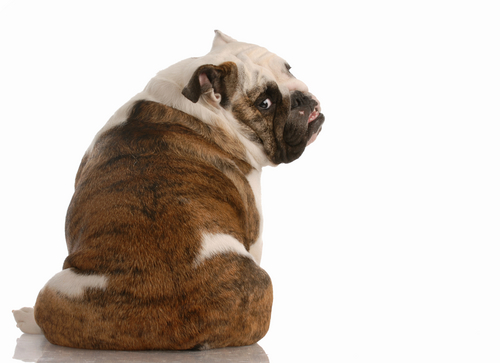
Your dog just walked over, did a full 180, and planted his rear end right in your face. You’re sitting there wondering if you should be offended or just go with it.
Don’t be offended. Seriously. Your dog just gave you one of the greatest compliments in the canine world.
This behavior — turning their butt toward you — is actually packed with meaning from a dog’s perspective. It’s got nothing to do with bad manners and everything to do with trust, communication, and a really good scratch. Let’s break it all down, because once you understand what your dog is actually saying, you’ll never see the butt-turn the same way again.
🐶 What Your Dog Is Actually Saying (Translation Guide)
| Dog Body Language | Human Translation |
|---|---|
| Backs butt toward you, tail up | “I trust you completely” |
| Backs butt toward you, wiggles | “Please scratch right there!” |
| Presents butt, then looks back at you | “I’m greeting you (dog-style)” |
| Backs into you on the couch | “You’re part of my pack” |
| Scooting on the floor after butt presentation | “I might need my anal glands checked” |
It’s the Highest Compliment Your Dog Can Give You
Think about this from a dog’s point of view. The butt is the most vulnerable part of a dog’s body. No teeth, no vision, no way to defend against a threat. When your dog turns his back to you, he’s making a conscious choice to expose his most vulnerable side.
That’s trust. Full, complete, unconditional trust.
Dogs in the wild only do this with members of their pack — animals they know won’t hurt them. When your dog backs that butt toward you, he’s saying “you’re one of mine.” He wouldn’t do it with a stranger or someone he’s unsure about. The fact that he does it with you? That’s a good sign.
This same instinct shows up in other ways too. You’ve probably noticed your dog likes to sleep in certain positions relative to you — often with their back pressed against your legs or body. Same idea. Proximity plus back-to-you equals maximum safety and trust.
A dog that doesn’t trust you keeps his face toward you so he can watch for danger. A dog that does trust you turns around without a second thought. Pretty sweet, right?
Your Dog Lives in a World Built on Smell
Here’s something wild: a dog’s nose has roughly 300 million olfactory receptors. Humans have about 6 million. That’s not just a little better — that’s a completely different sensory experience of the world.
Dogs communicate through scent the way we communicate through facial expressions and words. And the rear end? That’s basically a dog’s social media profile.
Every dog has two small anal glands on either side of their rectum. These glands release a unique scent signature that tells other dogs an enormous amount of information: sex, age, health status, diet, emotional state, and even stress level. When dogs sniff each other’s rears during greetings, they’re reading each other’s full biography.
When your dog turns his butt toward you, part of what’s happening is a greeting behavior. He’s offering you his scent profile — the dog version of “hi, here’s my business card.” In his world, that’s completely normal and, honestly, a bit of an honor. He’s treating you like a fellow dog he respects.
Now, you obviously can’t (and shouldn’t) read the information the way another dog would. But from his perspective, the offer stands. If you notice your dog does this consistently when you get home, he’s greeting you the way he’d greet a pack member. Take the compliment.
He’s Asking for a Scratch (and He Really Means It)
Let’s be honest about the most common reason: your dog wants you to scratch his tail head.
The “tail head” is the area right at the base of the tail — that spot where the back meets the beginning of the tail. For most dogs, it’s one of the best scratch spots on their entire body. And here’s the thing: they absolutely cannot reach it themselves.
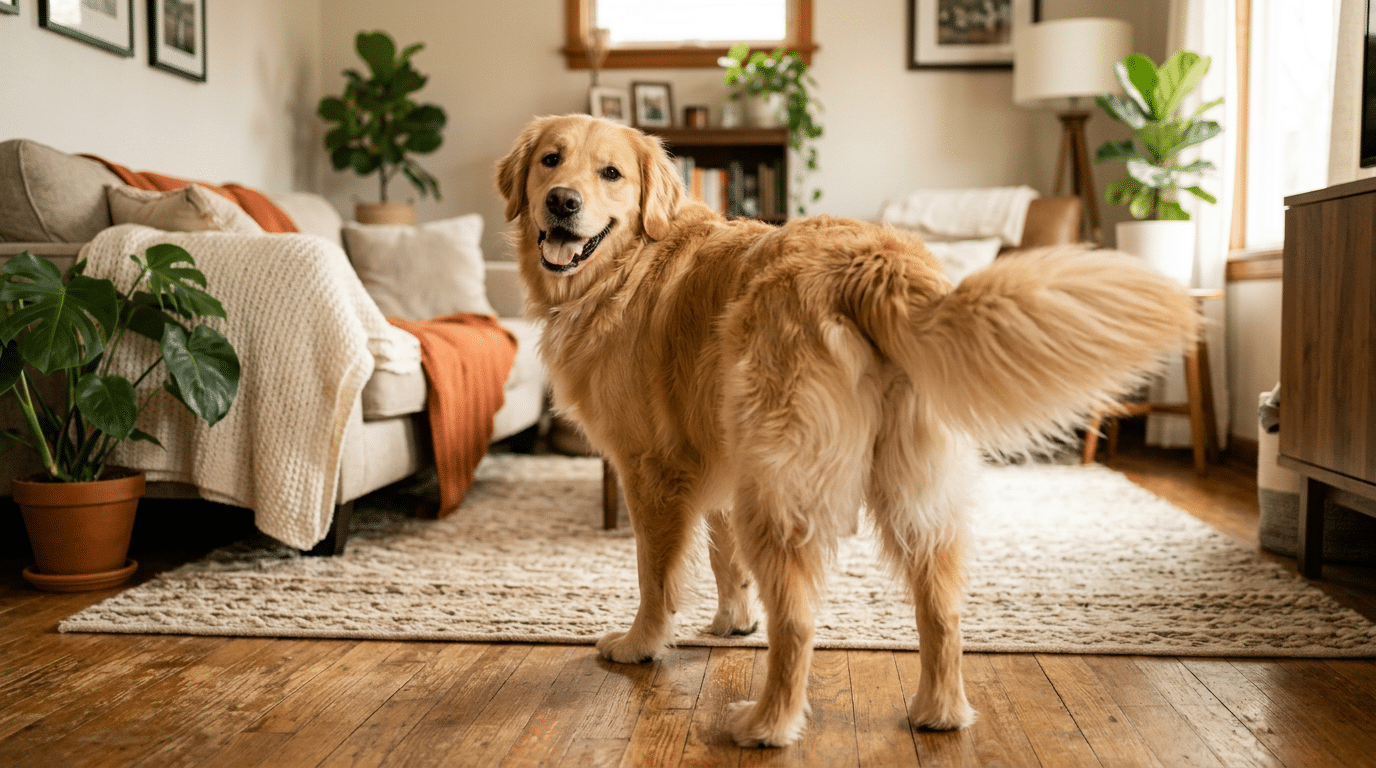
Try it next time. Give your dog a good scratch right at that spot. Watch what happens. Most dogs will lean into it, wiggle their rear end, and basically turn into a puddle. Some will do the classic “one leg starts kicking” thing because it feels so good.
So when your dog walks over and positions that butt right in front of your hand? He’s not being rude. He’s being efficient. He figured out exactly where he wants the scratch and he’s lined himself up perfectly. Smart dog.
Fleas, Itching, and the Tail Head Connection
If your dog is really insistent about the butt-toward-you thing — like, multiple times a day, very persistent — there might be a physical reason beyond just wanting attention.
Fleas love the tail head area. And flea allergies are one of the most common skin conditions in dogs. Flea saliva is intensely irritating, and for allergic dogs, a single flea bite can trigger serious itching that localizes right at that tail head zone. It’s not random — that area is a flea highway.
Signs you might be looking at a flea issue rather than just a friendly butt greeting:
- Your dog is scratching at the base of his tail frequently
- You see red, irritated skin or hair loss near the tail head
- Your dog is biting or chewing at his rear end
- You notice “flea dirt” (tiny black specks) in his coat when you part the fur
- The behavior spikes in warmer months
If any of those sound familiar, a vet visit is worth it. There are also dog allergy supplements that can help manage itching related to environmental and flea allergies. Some dogs also deal with anal gland problems that make the whole rear area uncomfortable — another good reason to check in with your vet if the behavior seems distress-related rather than affection-related.
The key difference is context. A dog casually backing into you while you’re watching TV? Probably trust and affection. A dog constantly spinning around and fixating on his rear? Worth checking out.
Pack Instinct: You’re Part of the Group
Dogs evolved from wolves. And wolves in a pack don’t just tolerate each other — they rely on each other for survival. That deep pack mentality is still running in the background of your dog’s brain, even if his biggest survival challenge is figuring out where his squeaky toy went.
In a wolf pack, members regularly press themselves against each other, back to back, while resting. It’s a safety strategy. Each animal covers the other’s blind spot. Everyone watches a different direction. Together, nothing sneaks up on them.
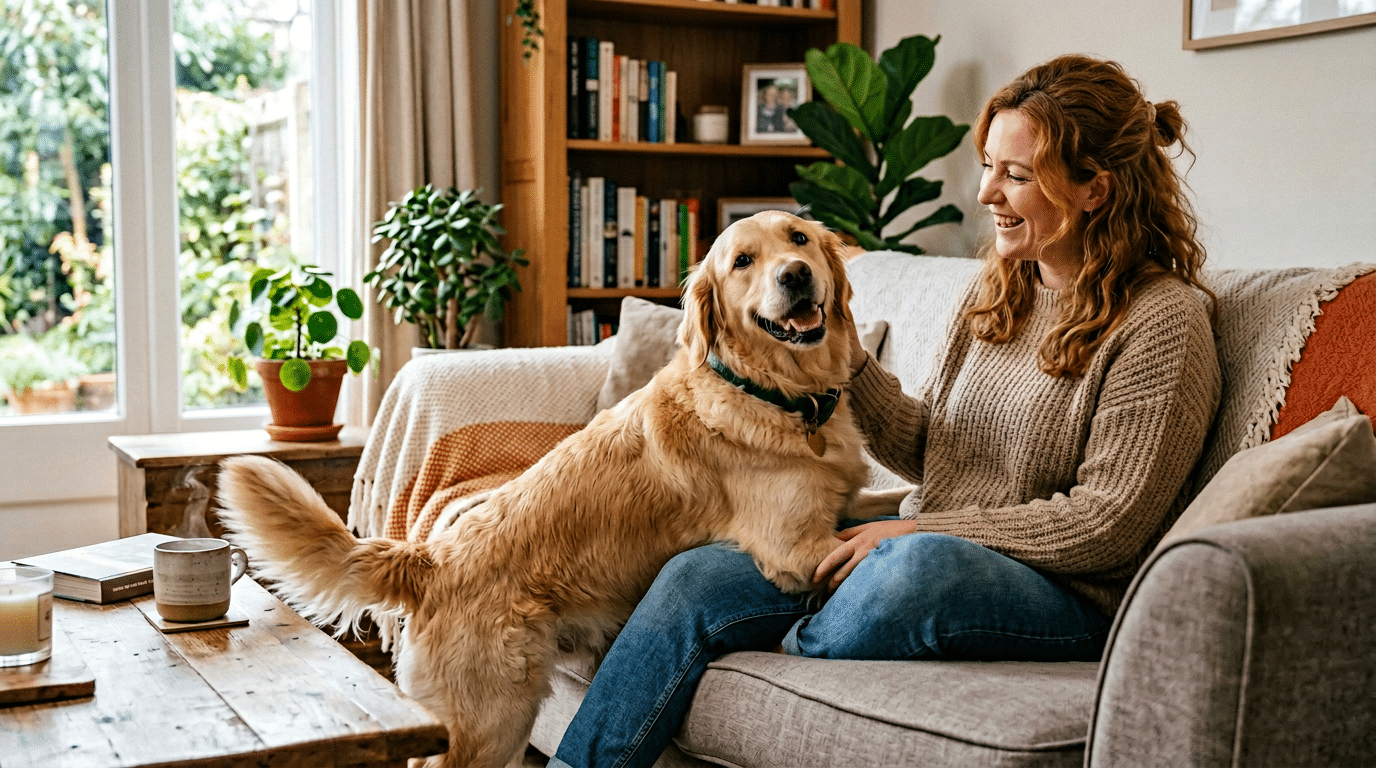
Your dog does the same thing. When he backs into you on the couch or presses his butt against your leg while you sit on the floor, he’s engaging that same instinct. You’re his pack mate. He’s covering the front, you’ve got the back (or the opposite). It feels safe and natural to him.
It’s also worth noting that dogs show affection to their favorite humans in a dozen subtle ways — and the butt-turn is one of the less obvious but genuinely meaningful ones. If you have a dog who does this, you’re clearly someone he considers part of his inner circle.
Some independent-minded breeds are less likely to do this frequently — they tend to be more selective about closeness. If your headstrong Chow Chow or Akita backs into you, that means even more than when a naturally cuddly Lab does it.
When Should You Actually Be Concerned?
Most of the time? Not at all. The butt-turn is totally normal, healthy dog behavior. But there are a few situations where it’s worth paying closer attention.
Talk to your vet if:
- Your dog seems uncomfortable or agitated when presenting his rear
- There’s visible swelling, redness, or discharge near the tail or anal area
- Your dog is scooting on the floor regularly (often a sign of anal gland issues)
- The behavior started suddenly after previously never doing it
- He’s also chewing, licking, or biting at the area
These could point to anal gland impaction, skin infection, parasites, or allergies — all very treatable, but better caught early. If you notice your dog has any sudden behavior changes, it’s always smart to rule out a physical cause first.
🔍 Quick Checklist: Affection vs. Discomfort
| Probably Affection/Normal | Talk to Your Vet |
|---|---|
| Casual butt-toward-you on the couch | Scooting across the floor |
| Backing into you while you pet him | Constant tail-chasing or biting rear |
| Positioning for the tail-head scratch | Hair loss near tail base |
| Pressing back against you at night | Swelling or odor near anal area |
| Greeting you with rear-first approach | Sudden change in behavior |
Frequently Asked Questions
Why does my dog turn his butt toward me when I pet him?
He’s guiding you to his favorite scratch spot — the tail head area at the base of the tail. Dogs can’t reach this spot on their own, and it feels really good when scratched. By positioning his rear toward you, he’s basically pointing you at the right location. Go ahead and give it a scratch. He’ll love you for it.
Is it bad when dogs present their butt?
Not at all. It’s actually a sign of trust and affection. Dogs only expose their vulnerable rear end to animals or people they trust completely. If anything, it’s a compliment. The only time to worry is if there are signs of physical discomfort like scooting, excessive licking, or skin irritation near the tail area.
Why does my dog back into me and push?
This is pack behavior. Your dog is pressing himself against you the way pack members do in the wild — it’s a bonding behavior that means he feels safe with you. Some dogs do this on the couch, in bed, or when you’re sitting on the floor. It’s his way of saying you’re his safe person.
Why does my dog put his butt toward strangers?
Some social dogs extend this greeting to new people as a non-threatening introduction. In dog social etiquette, presenting the rear is actually considered polite — it’s less confrontational than a direct face-to-face approach. If your dog does this with strangers, it usually means he’s confident and friendly, not anxious.
Should I be concerned if my dog suddenly started doing this more?
A sudden increase in rear-presenting behavior could point to physical discomfort — especially if it’s paired with scooting, licking, or visible irritation near the tail. Full anal glands, flea allergy, or a skin infection are common culprits. If the behavior change is sudden and accompanied by other symptoms, a vet checkup is the smart move.
Do all dogs do this?
Most dogs do it to some degree, but frequency varies a lot by personality and breed. Velcro dogs (like Labs, Goldens, and Aussies) tend to do it more. Independent breeds like Chow Chows, Shibas, and Basenjis do it less often. When they do it, though, it carries just as much meaning.
Bottom Line
The next time your dog swings his rear end in your direction, don’t be confused or put off. He’s doing you a real honor.
Whether he’s saying “I trust you completely,” asking for a good tail-head scratch, greeting you like a fellow pack member, or just settling in against you because you’re his safe person — it all comes from the same place. He likes you. A lot.
The butt-turn is one of those wonderfully weird things about dogs that makes zero sense in human terms and total sense in dog terms. They don’t do it with everyone. They do it with the people who matter most.
Just give him the scratch. You’ll both be happier for it.
iHeartDogs is reader-supported. Some links on this page may earn a small commission, at no extra cost to you.
