
 Shutterstock
Pick up any Dachshund book and you’ll quickly realize this breed comes in a staggering number of colors and patterns. Red, chocolate, blue, cream, dapple, piebald, brindle — the list keeps going. And if you’re trying to figure out which colors are AKC-recognized, which ones come with health risks, or why your puppy’s coat looks different at six months than it did at six weeks, you’ve landed in the right place.
This guide covers every official Dachshund color and pattern, including the ones breeders don’t always advertise, plus a real talk section on double dapple health problems. Whether you’re shopping for a puppy or just curious about your current dog’s genetics, here’s everything you need to know about dachshund colors in 2026.
Quick Facts: Dachshund Colors at a Glance
| Color Category | Examples | AKC Standard? |
|---|---|---|
| Base Colors | Red, Cream | Yes |
| Two-Tone Colors | Black & Tan, Chocolate & Tan, Blue & Tan, Isabella & Tan, Black & Cream, Chocolate & Cream | Yes |
| Patterns | Dapple, Piebald, Brindle, Sable | Yes |
| Wire-Hair Only | Wild Boar, Gray (Wheaten) | Yes |
| Health Warning | Double Dapple | Not shown (not bred) |
AKC-Recognized Dachshund Base Colors
The American Kennel Club recognizes two base colors for Dachshunds: red and cream. Everything else is technically a two-tone combination built on a base of black or chocolate (brown). That said, the full list of accepted colors is much longer once you add in the bi-color options.
Red Dachshund
 Shutterstock
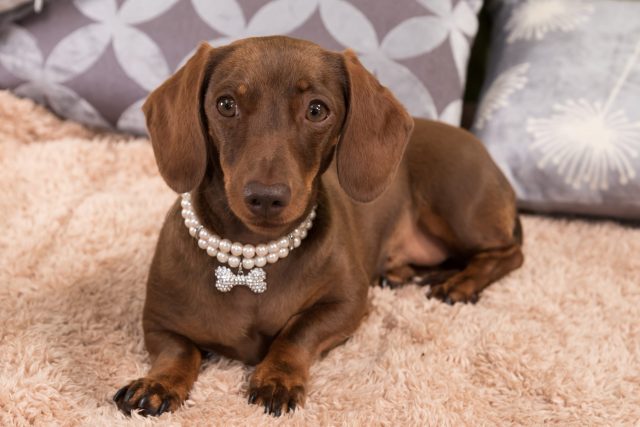
Red is the most common Dachshund color, and it’s the one most people picture when they think of the breed. The shade ranges from a deep mahogany red to a lighter golden-red. Some red Dachshunds have a little black shading along the back, which fades as they mature. You’ll see red in all three coat types: smooth, long-haired, and wire-haired.
One thing worth knowing: “red” in dog genetics means something different than it does visually. Red Dachshunds carry the phaeomelanin (yellow-red) pigment gene. The deeper the shade, the more eumelanin influence is at play. Don’t worry too much about the genetics — just know that a “red” Dachshund can look anywhere from golden yellow to a rich russet brown.
Cream Dachshund
 Shutterstock
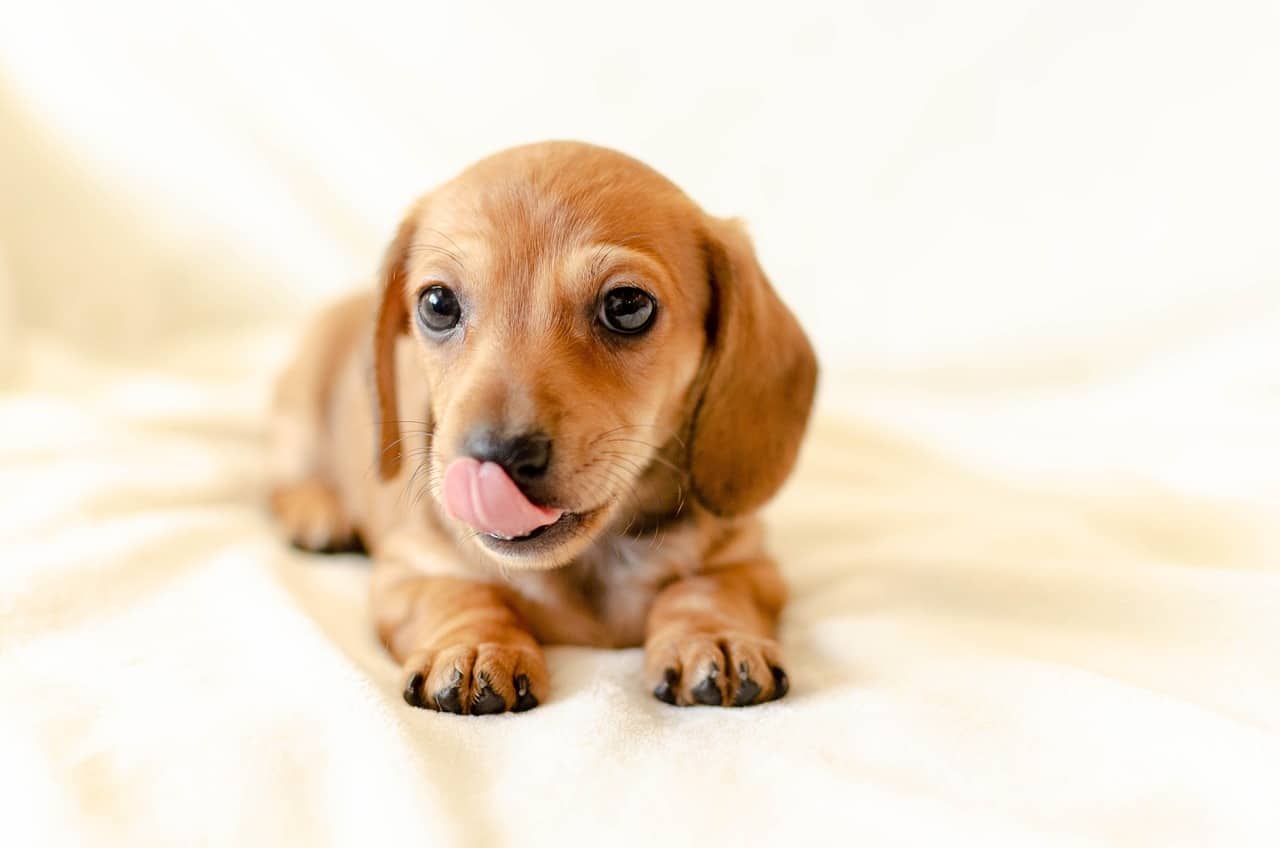
Cream Dachshunds are the other recognized base color — a soft, pale coat ranging from near-white ivory to a warm golden cream. Long-haired cream Dachshunds are especially striking, with silky ears that look almost platinum in sunlight. Smooth-coated creams look a bit like a very light golden retriever in miniature form.
Puppies born cream can look almost white at first. Don’t panic if your cream puppy’s coat looks a bit yellowish or uneven — it settles into a consistent shade by adulthood. True cream carries the “ee” recessive gene, which suppresses all dark pigment in the coat.
Black and Tan Dachshund
 Shutterstock
Black and tan is probably the second most recognized Dachshund color. You’ll see a jet-black body with tan (rust) markings above the eyes, on the muzzle, chest, legs, and under the tail. It’s the same “tan point” pattern you see on Dobermans and Rottweilers. On a Dachshund, those tan eyebrow dots give the dog an expressive, almost comical look.
If you’re considering dog breeds similar to Dachshunds, you’ll notice this black-and-tan pattern pops up in several hunting breeds. It’s an ancient color associated with working dog genetics.
Chocolate and Tan Dachshund
 Shutterstock
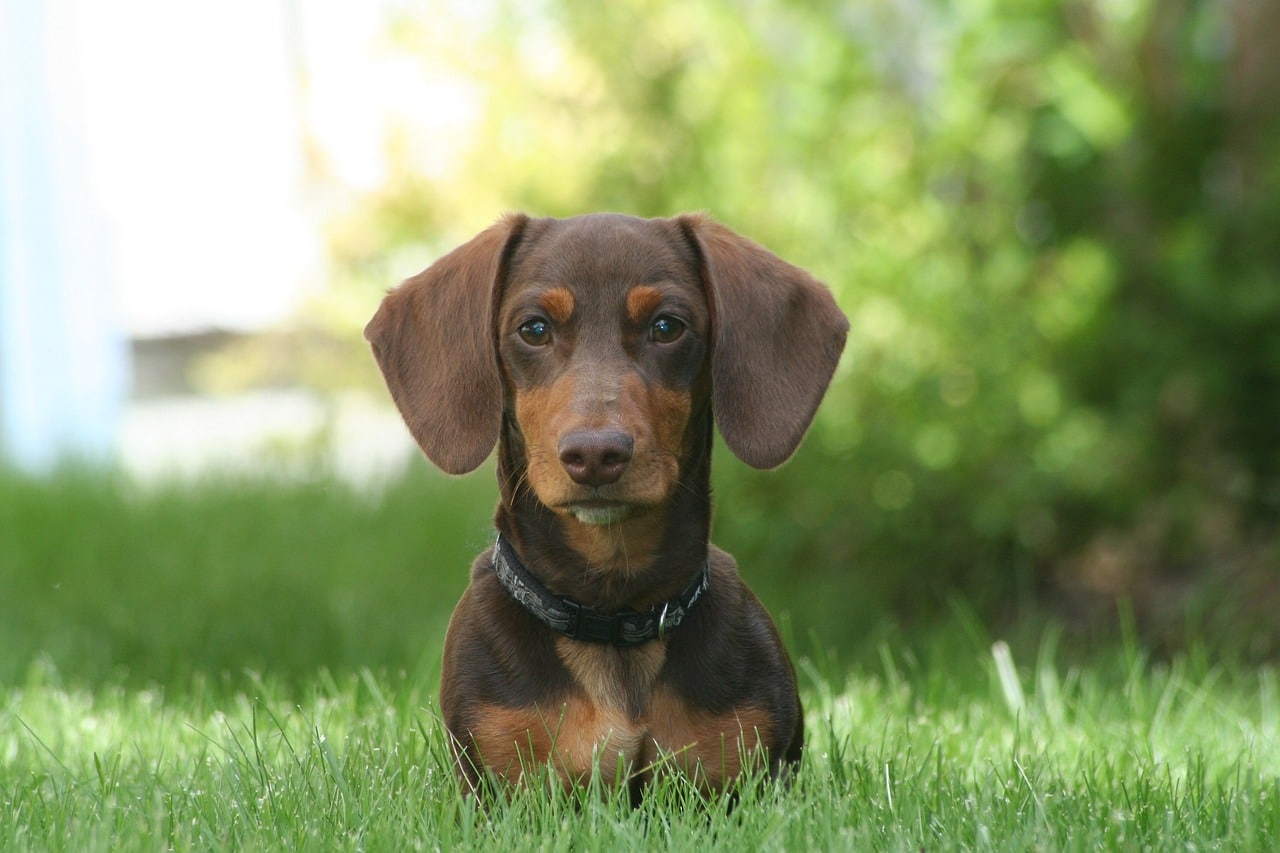
Same tan-point pattern as the black and tan, but the body color is a rich, warm brown instead of black. Chocolate and tan Dachshunds often have brown or hazel eyes (rather than dark brown), lighter noses, and brown paw pads. The whole look is warmer and softer than the black and tan.
Breeders sometimes call this “chocolate and rust.” Either name is fine. The genetics involve the recessive “b” allele that changes black pigment to brown throughout the coat.
Blue and Tan Dachshund
 Shutterstock
Blue and tan is a diluted version of black and tan. The dilution gene (dd) softens the black into a steel-gray or smoky blue, paired with tan points. The nose and nails take on a grayish-blue tone too. It’s a cool, unusual look that’s hard to miss.
Here’s something to know upfront: blue Dachshunds can be prone to Color Dilution Alopecia (CDA), a condition where the diluted coat loses hair in patches. Not every blue dog develops it, but it’s worth asking breeders about. The cost of a Dachshund puppy in dilute colors can be higher precisely because the genetics are more complex.
Isabella and Tan Dachshund
 Shutterstock
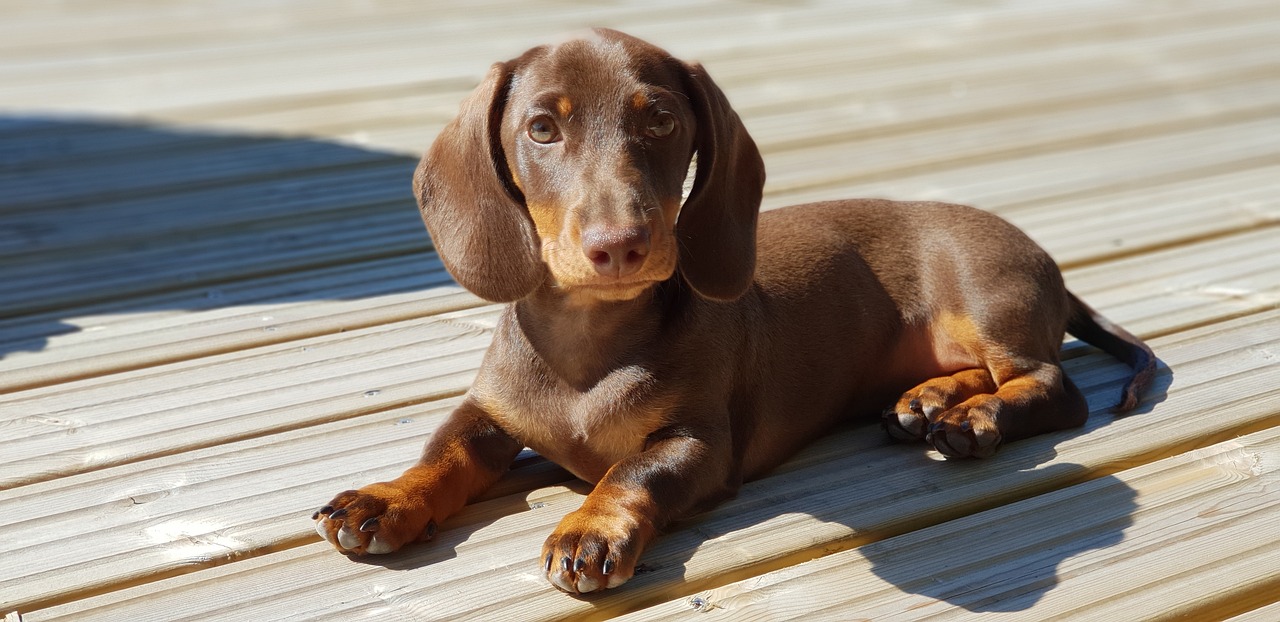
Isabella (also called fawn) is the rarest of the standard Dachshund colors. It’s what happens when a chocolate dog also carries two copies of the dilution gene. The result is a pale, warm taupe or lilac-fawn coat with tan markings, light eyes, and a pinkish-brown nose. The overall effect is almost ethereal.
Like blue Dachshunds, Isabellas can be at risk for Color Dilution Alopecia. If you’re set on one, find a breeder who health-tests. Responsible breeders will happily discuss their lines’ history with CDA.
Other Recognized Colors
The AKC also accepts black and cream, chocolate and cream, solid chocolate, and solid black. Solid colors without tan points are less common in show lines but do appear. They follow the same genetic rules: solid black requires both copies of the dominant black gene without any tan-point expression; solid chocolate needs the recessive brown gene without tan points.
Black and cream works the same way as black and tan, but the “tan” is replaced by the paler cream shade. It’s a subtle, elegant look that’s popular in long-haired Dachshunds where the cream markings create a soft contrast against the dark body.
Dachshund Coat Patterns
Colors and patterns are two separate things in Dachshund genetics. A dog’s base color is one gene set; its pattern is another. You can have a chocolate dapple, a black-and-tan piebald, a red brindle — the combinations stack. Here’s how each pattern works.
Dapple Dachshund
 Shutterstock
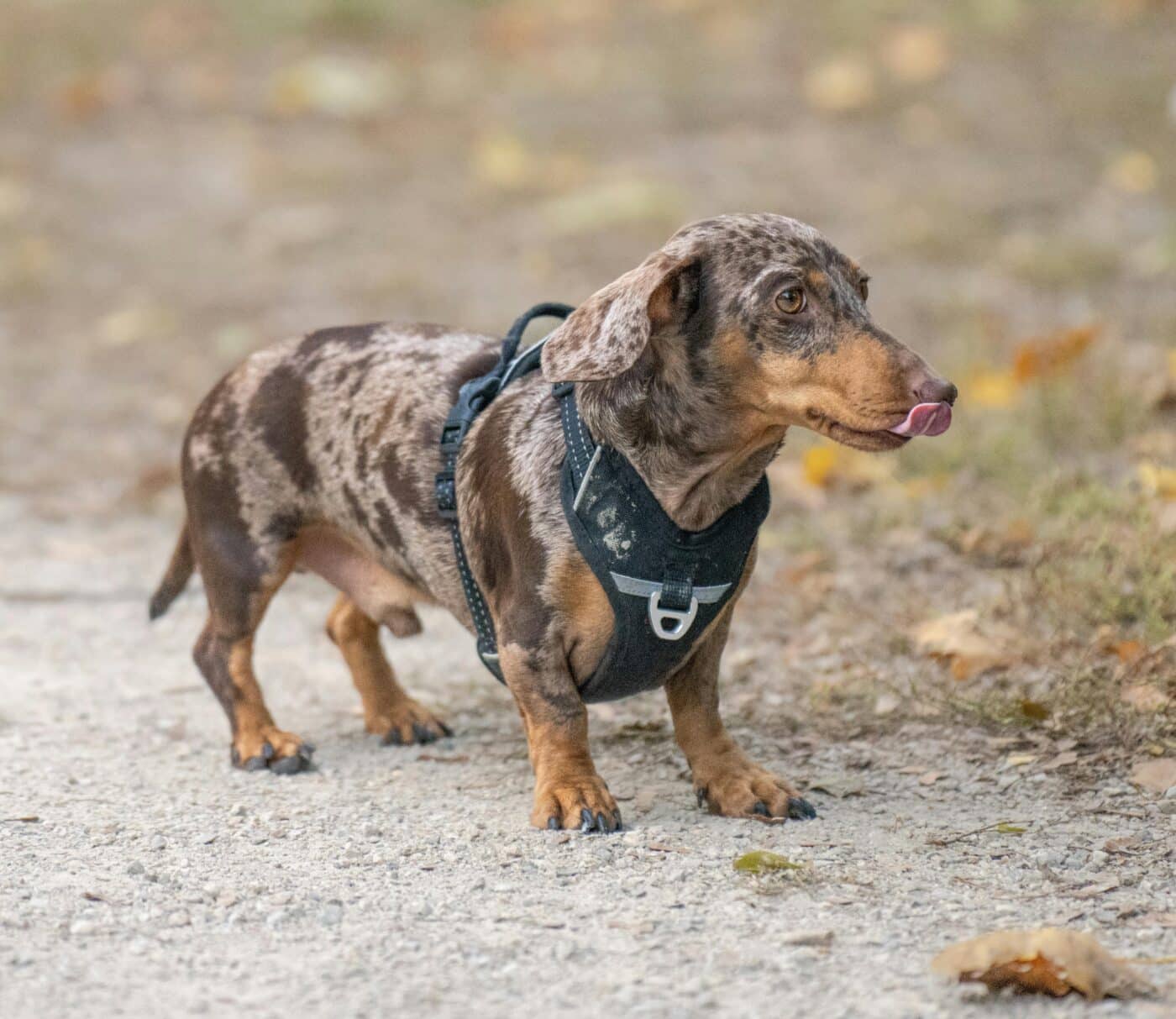
Dapple is a merle-like pattern where lighter spots or swirls appear against a darker base coat. A red dapple has cream or silver patches scattered through a red coat. A black-and-tan dapple gets lighter gray or silver patches on the black portions. No two dapples look exactly alike — it’s one of the more visually complex patterns in the breed.
The dapple pattern comes from the merle gene (M locus). If you’ve read about merle dog breeds, you’ll recognize the same genetics at work here. Single dapple (one copy of the gene) is perfectly safe and AKC-recognized. The real danger is double dapple — keep reading.
Double Dapple: A Serious Health Warning
Double dapple happens when two dapple Dachshunds are bred together. Each puppy has two copies of the merle gene instead of one. The coat often shows large white patches — especially on the head, chest, and legs. It can look striking. But the health consequences are severe.
Double dapple Dachshunds have a much higher rate of:
- Blindness — often complete, including microphthalmia (abnormally small eyes)
- Deafness — partial or complete, in one or both ears
- Missing or malformed eyes
Responsible breeders don’t produce double dapples. If you see a Dachshund advertised as “double dapple” or priced high for having lots of white on the head, walk away. The cute coat isn’t worth the dog’s lifetime of disability.
Single dapple dogs bred with non-dapple dogs are completely fine. The health risk is specific to dapple-x-dapple breeding.
Piebald Dachshund
 Shutterstock
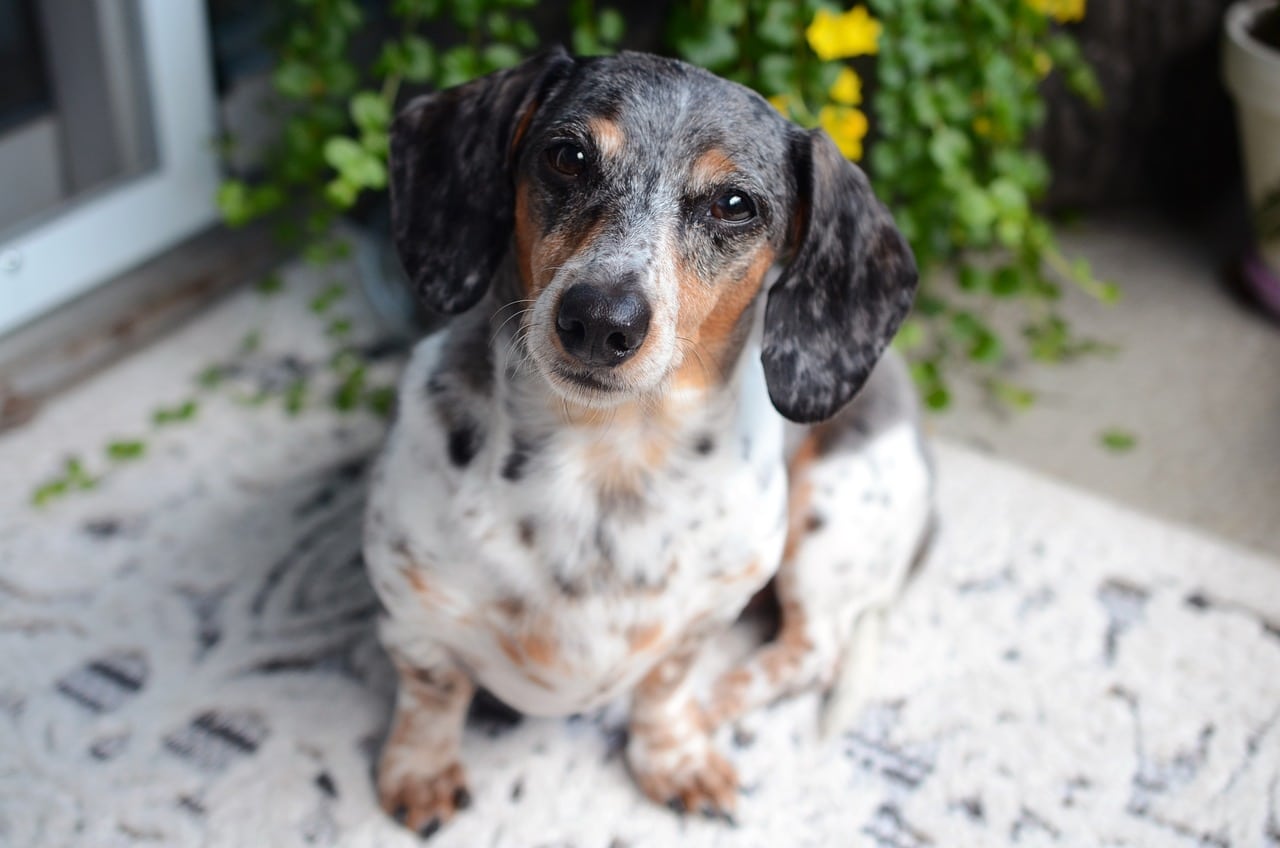
Piebald Dachshunds have a white base coat with patches of solid color — most often red, black and tan, or chocolate and tan. The patches can be large or small, and their placement varies from dog to dog. Some piebalds look mostly white with just a few spots; others are more evenly split between white and color.
Unlike double dapple, piebald doesn’t carry hearing or vision risks on its own. It does require two copies of the recessive piebald gene, so both parents have to carry it. A piebald bred to a non-piebald carrier won’t produce piebald puppies unless both carry the gene.
Brindle Dachshund
 Shutterstock
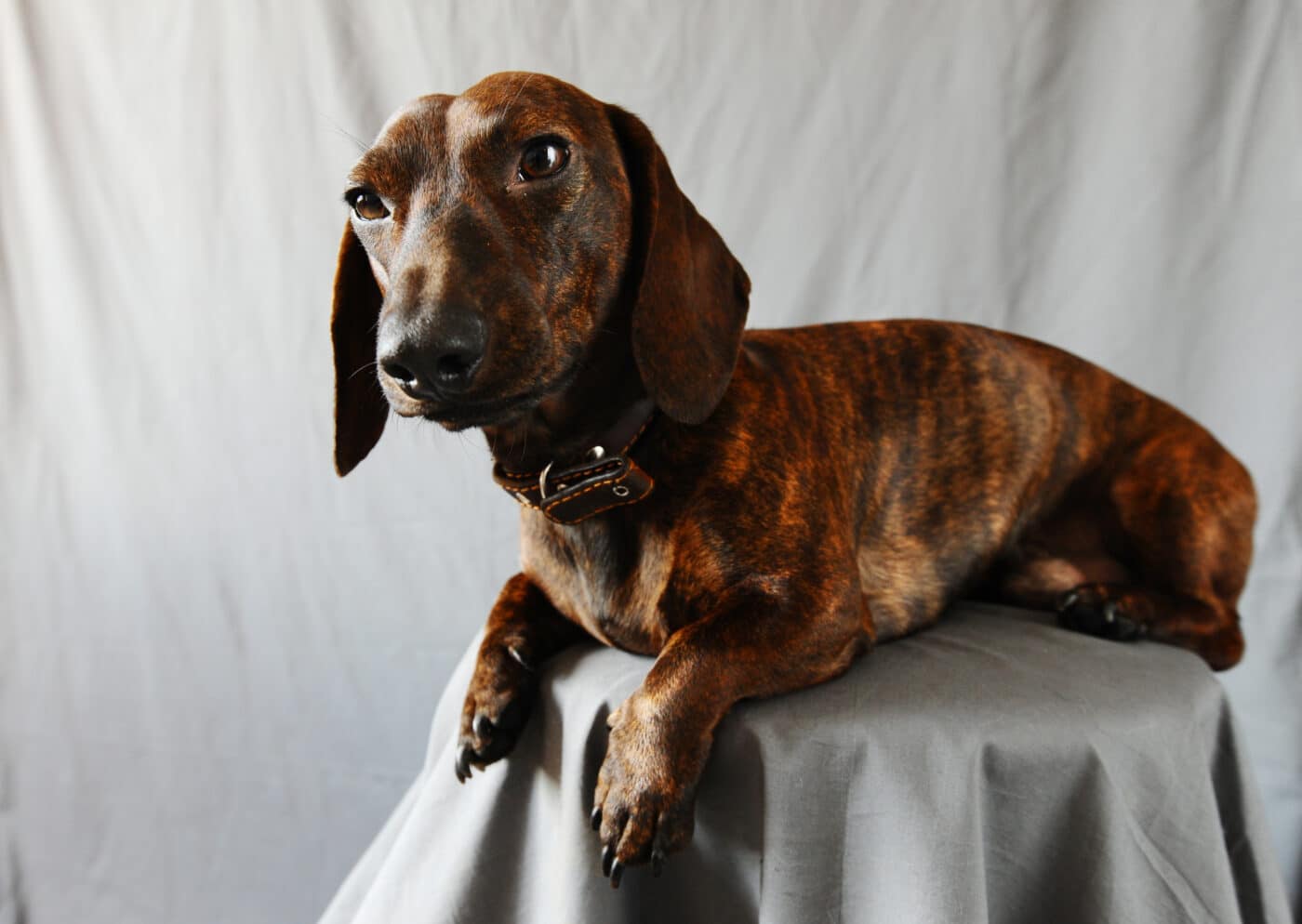
Brindle gives a Dachshund dark stripes over a lighter base color — think tiger stripes in miniature. The stripes are usually dark brown or black over a red or tan background. Some brindles have very subtle, almost invisible striping; others have bold, distinct lines across the whole body.
Brindle is caused by a dominant gene, so only one copy is needed to show the pattern. It can occur on any base color, which means you can get a black-and-tan brindle, a red brindle, a chocolate-and-tan brindle, and more. The AKC recognizes brindle as a valid pattern in Dachshunds.
Sable Dachshund
Sable looks like a two-toned overlay: each individual hair has a dark tip over a lighter base. On a red sable, you get a red body with black-tipped hairs scattered throughout, giving the coat a shadowed, dimensional look. It’s most obvious in long-haired Dachshunds where the flowing coat catches the light.
Sable is classified under the red color in AKC terms. It’s fairly common but often unnoticed — many people just describe their dog as “dark red” without realizing it’s technically sable. You can usually confirm by parting the coat and checking if the base of the hairs is lighter than the tips.
Wild Boar Dachshund
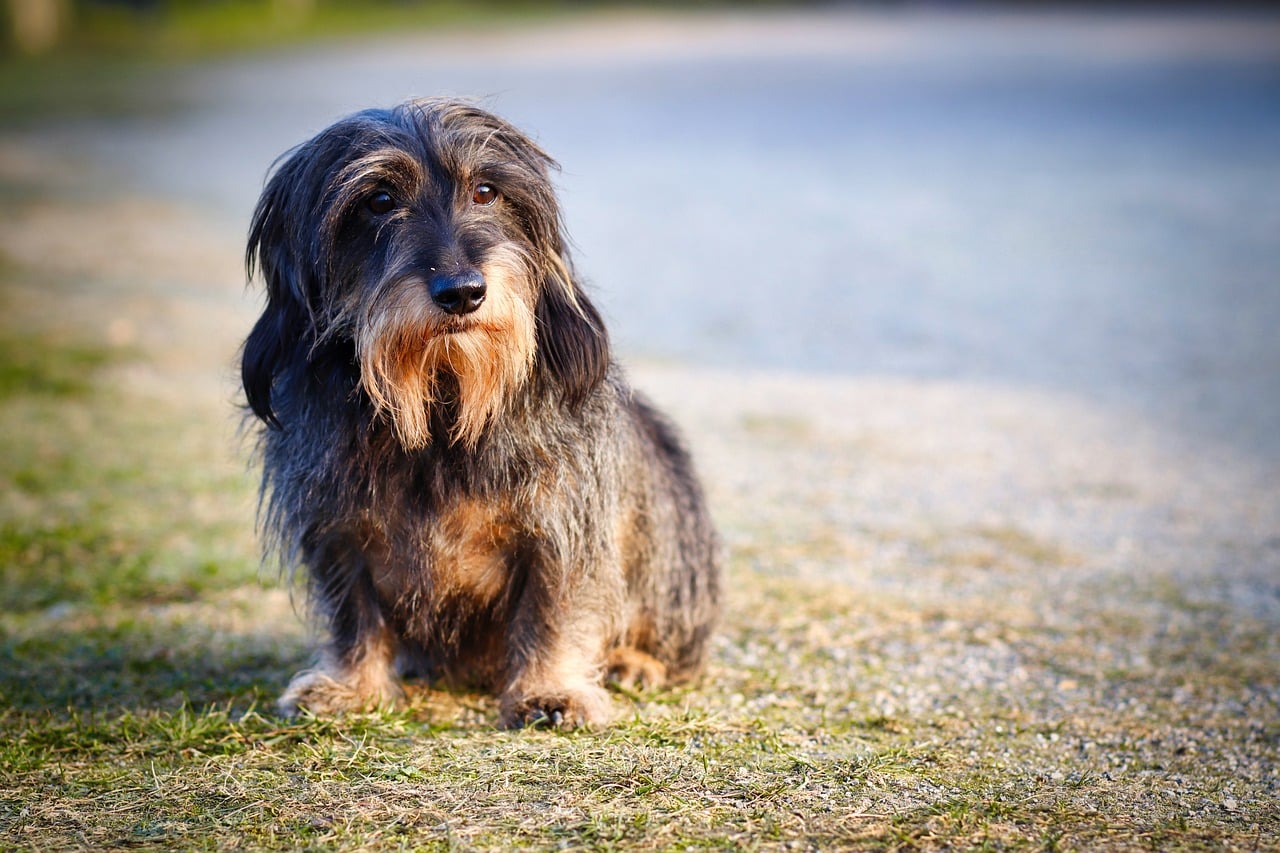 Shutterstock
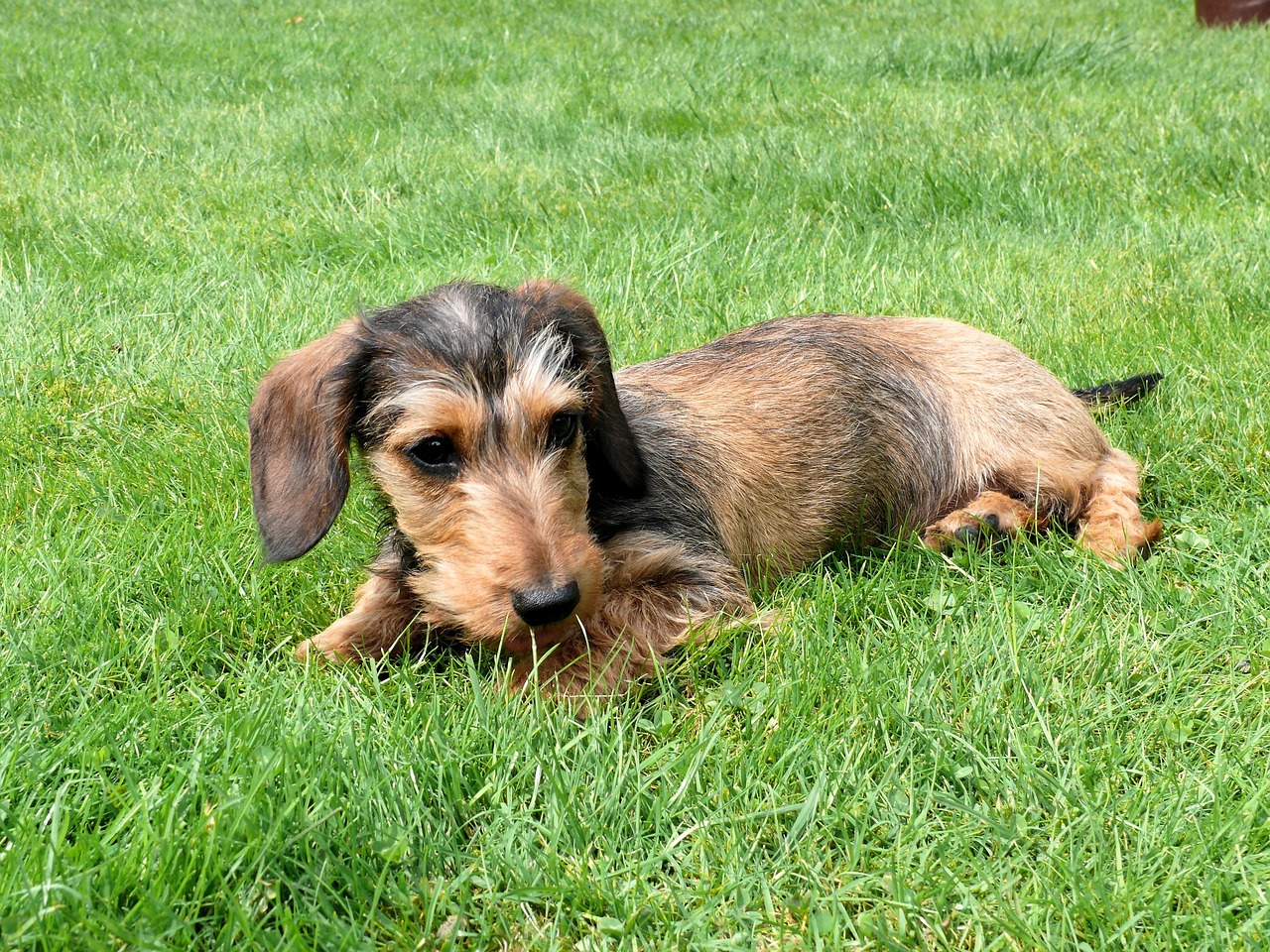
Wild boar is exclusive to wire-haired Dachshunds. It’s a grizzled, mixed color that looks like black, brown, and tan hairs all woven together — a lot like the coat of an actual wild boar. The texture of the wire coat amplifies the effect, giving these dogs a rugged, earthy look that stands out from the sleeker smooth-coated colors.
Wire-haired Dachshunds in wild boar are sometimes described as looking like little old men with their bristly coats and bushy eyebrows. It’s a look that’s grown in popularity, especially as people discover how different the wire-haired personality can be from smooth and long-haired varieties. If you’re thinking about getting one, check out the best dog foods for Dachshunds to start them off on the right nutritional foundation.
Do Dachshund Colors Change with Age?
Yes, and sometimes quite dramatically. A few things to expect as your dog matures:
Red puppies often go through a “clearing” phase. Born darker, some red Dachshunds lighten noticeably as adults. By two years old, your dark mahogany pup might look a lot closer to golden red. It’s normal and no cause for concern.
Cream puppies can look yellowish at first. True English creams are born with a yellowish tint that mellows into the classic pale cream shade over their first few months. The final color is usually set by 6-12 months.
Black and tan can develop “ghosting.” Some black-and-tan Dachshunds develop brown or gray patches in the black areas as they age, especially on the back. It’s sometimes mistaken for dirt or sun bleaching. Genetically, it can signal that the dog carries a hidden brown gene.
Dapple patterns sometimes intensify. Young dapples can look lightly spotted as puppies, with the marbled pattern becoming more distinct as the coat thickens at adulthood.
None of these changes indicate a health problem. They’re just genetics playing out over time. If you notice sudden, patchy coat loss alongside color changes, that’s worth a vet visit — that’s a different story than normal color maturation.
While we’re talking about Dachshund health: back problems are a much bigger concern for this breed than coat color. Freeze-dried dog food for Dachshunds can help maintain a healthy weight, which directly reduces IVDD risk. Worth researching regardless of what color your dog is.
Dachshund Color Rarity Guide
| Color / Pattern | Rarity | Notes |
|---|---|---|
| Red | Very Common | Most popular color |
| Black and Tan | Common | Second most common |
| Chocolate and Tan | Moderately Common | Popular in long-haired |
| Cream | Moderately Common | Very popular in long-haired |
| Dapple | Less Common | High demand, be wary of double dapple |
| Piebald | Less Common | Both parents must carry gene |
| Brindle | Uncommon | Often misidentified |
| Blue and Tan | Rare | CDA risk; higher price |
| Isabella and Tan | Very Rare | CDA risk; double dilute |

Frequently Asked Questions
What is the rarest Dachshund color?
Isabella (fawn) and tan is the rarest AKC-recognized Dachshund color. It requires a dog to be both homozygous for the recessive brown gene AND carry two copies of the dilution gene. You won’t find these at most breeders, and the ones who specialize in them charge a premium. Solid blue (without tan points) is also extremely rare.
What Dachshund colors does the AKC recognize?
The AKC recognizes: red, cream, black and tan, black and cream, chocolate and tan, chocolate and cream, blue and tan, blue and cream, and Isabella (fawn) and tan. Patterns that can appear on any base color include dapple, piebald, brindle, and sable. Wire-haired Dachshunds also have wild boar and gray (wheaten) listed as valid colors.
Are double dapple Dachshunds healthy?
No. Double dapple Dachshunds are at serious risk of blindness, deafness, and eye abnormalities. Ethical breeders don’t breed two dapple Dachshunds together. If you see a “double dapple” puppy for sale, that’s a red flag about the breeder’s practices. A single dapple bred with a solid-colored dog produces safe, healthy litters where 50% of puppies will carry the dapple pattern.
Do Dachshund colors affect temperament?
No scientific evidence links coat color to temperament in Dachshunds. Personality is shaped by genetics, early socialization, training, and individual variation. You’ll find bold and nervous Dachshunds in every color. Don’t choose a puppy based on color expectations for behavior — choose based on the puppy’s actual personality and the breeder’s socialization practices.
Can Dachshund color predict health problems?
Sometimes. Blue and Isabella Dachshunds can develop Color Dilution Alopecia, a skin condition that causes patchy hair loss. Double dapples have high rates of sensory deficits. But the most common health issue in Dachshunds, IVDD (intervertebral disc disease), affects all colors equally. Their long spine and short legs create the risk — not their coat color. Regular vet checkups, maintaining a healthy weight, and avoiding jumping from heights matter far more than color when it comes to keeping your Dachshund healthy.
What color Dachshund is most popular?
Red and black-and-tan are consistently the most popular Dachshund colors. Red is the breed’s “classic” look and has been the dominant color for generations. Black-and-tan is a close second. Dapple has surged in demand in recent years due to social media attention, though this has unfortunately also increased double-dapple breeding by irresponsible sellers. Always buy from a reputable source who can show health testing for both parents.

Bottom Line
Dachshunds come in more colors and patterns than almost any other breed. From the classic red to the rare Isabella, from clean solid coats to wild-boar wire-hair, there’s a Dachshund for every visual preference. But here’s the thing: color is the least important factor when picking a Dachshund.
Focus on the breeder’s health testing, the puppy’s socialization, and the parents’ temperament. A healthy red Dachshund will make you just as happy as a rare dapple — and probably a lot less anxious about vet bills. Speaking of which, knowing what to feed them matters a ton: check out this guide to the best dog foods for Dachshunds with no fillers to keep your sausage dog at a healthy weight and protect that long spine.
Avoid double dapple breeders. Ask questions about CDA if you’re considering blue or Isabella. And remember that whatever color your Dachshund is, their personality will be the same: stubborn, loving, loud, and absolutely convinced they’re the boss of you.
That’s the real constant across every dachshund color. And honestly? It’s half the charm.
 Toledo, United States.